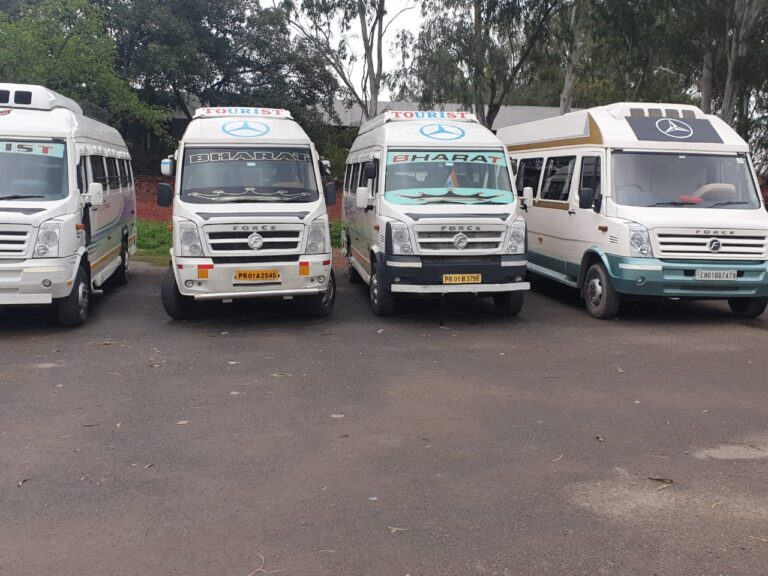
To guarantee a safe and comfortable journey when booking a tempo traveller, apply eight essential travel tips: choose seasoned mountain chauffeurs with verified hill credentials, assign middle cabin rows to motion-sensitive passengers, keep emergency exits and aisles completely clear, understand hill AC operational physics, respect statutory speed limits (80 km/h), verify commercial AITP permits, maintain balanced luggage loading, and plan restorative comfort stops every 3 hours. Following these tested travel protocols ensures a relaxing, memorable group experience across every highway and mountain pass.
Why Is Hill Driving Expertise the #1 Safety Consideration?
Navigating Himalayan passes like Rohtang, Jalori, or the steep approach to Dharamshala is vastly different from driving on wide expressways. Experienced mountain drivers use lower gears (second and third gear) for engine braking, avoiding brake fade and rotor warping on long downhill slopes.
At Bharat Travels, our mountain chauffeurs possess a minimum of 7 to 10 years of commercial hill driving experience across Himachal Pradesh, Uttarakhand, and Jammu & Kashmir. When booking tempo traveller hire in Chandigarh, explore our regional route guides for Chandigarh to Manali and Chandigarh to Dharamshala to learn more about mountain route safety.
How Should You Assign Passenger Seating to Prevent Motion Sickness?
Motion sickness (car sickness) is triggered by conflicting sensory signals between the inner ear and the eyes when vehicles navigate winding mountain roads. The rear row of a tempo traveller experiences the most vertical oscillation over speed bumps and the greatest lateral swing around sharp curves.
Seat elderly passengers and anyone prone to motion sickness in the middle rows of a 12 seater tempo traveller or 17 seater luxury coach. Encourage them to look forward toward the horizon rather than reading screens, and keep natural ginger or mint lozenges on hand.
What Is the Technical Reason AC Is Turned Off on Steep Mountain Inclines?
Understanding vehicle mechanics helps align travel expectations. Ascending steep mountain passes in second gear places significant thermal load on heavy commercial engines. Running a heavy-duty dual-compressor AC simultaneously can cause engine temperatures to spike.
Reputable operators explain this upfront. In alpine altitudes, outdoor air is clean, crisp, and naturally cool (12°C to 18°C), making fresh air through side hopper vents far more pleasant than artificial refrigeration. On plain highways and valley connections, AC operates continuously.
Why Must Cabin Aisles and Emergency Exits Remain Clear?
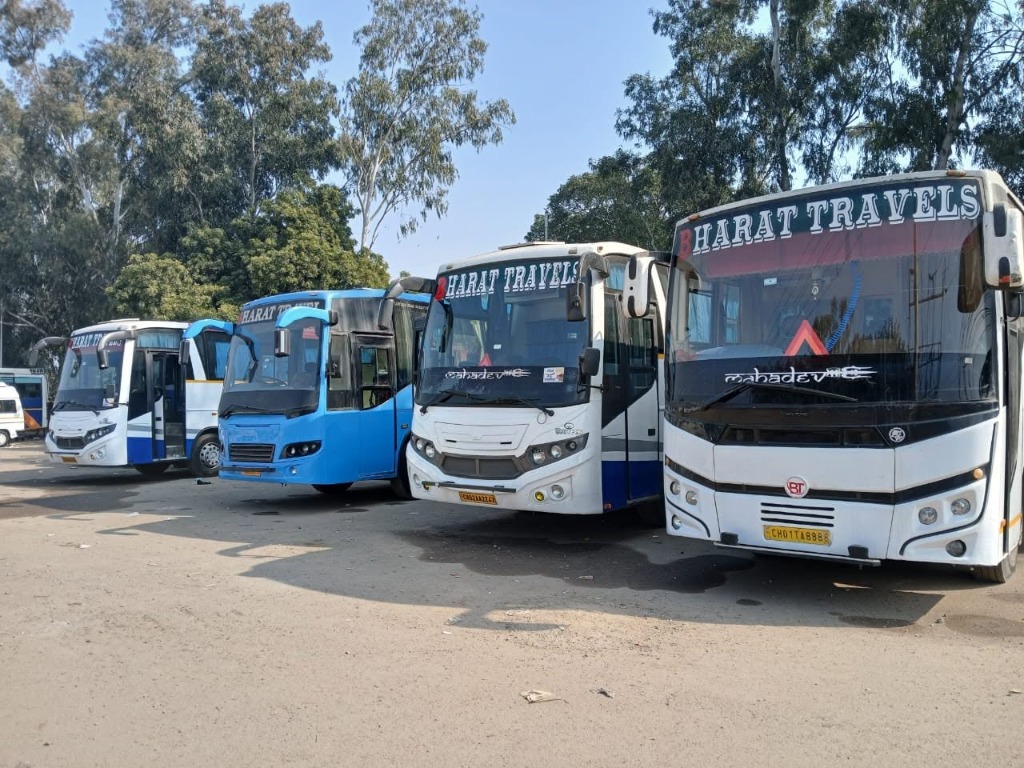
In an emergency, every second counts. Piling suitcases in the central walkway or wedging backpacks against the rear exit door prevents passengers from exiting quickly if needed. It also makes moving through the cabin during travel awkward and hazardous.
Ensure that all large luggage is securely stowed in the rear luggage boot or on the all-weather rooftop carrier with waterproof canvas covers. Keep the aisle and floor completely clear of loose obstacles throughout your trip.
Why Is an 80 km/h Speed Governor Essential for Highway Safety?
A loaded 17 or 26-seater tempo traveller weighs between 3.5 and 5 tons. At highway speeds above 90 km/h, emergency braking distances increase dramatically, and sudden swerving to avoid highway obstacles can trigger severe lateral instability. As highlighted in expressway safety guidelines by the National Highways Authority of India (NHAI), adhering to designated commercial speed limits ensures maximum passenger safety.
A calibrated speed governor set to 80 km/h ensures safe, controlled highway cruising. Never encourage a chauffeur to disconnect or override the speed limiter to reach a destination faster. Arriving safely is always the top priority.
What Protocols Protect Passengers During Sudden Mountain Road Closures and Landslides?
The Himalayas are young, dynamic mountains. During intense July-August cloudbursts or heavy January blizzards, highways like the Kiratpur-Manali four-lane or Hindustan-Tibet road can experience sudden roadblock delays due to clearance machinery or mudslides.
An experienced chauffeur knows the difference between a minor 30-minute clearing operation and a multi-day roadblock, allowing your group to divert early via scenic bypass corridors (such as routing via Bilaspur-Sundernagar rather than high-risk ghats). Bharat Travels 24/7 central control desk monitors regional highway conditions constantly to reroute vehicles safely.
How Does Cabin Air Filtration and Natural Ventilation Prevent Motion Sickness?
When 12 to 17 passengers travel in a sealed, air-conditioned cabin for multiple hours, carbon dioxide (CO2) concentrations gradually rise if fresh air vents remain closed. Elevated CO2 levels induce drowsiness, lightheadedness, and motion discomfort.
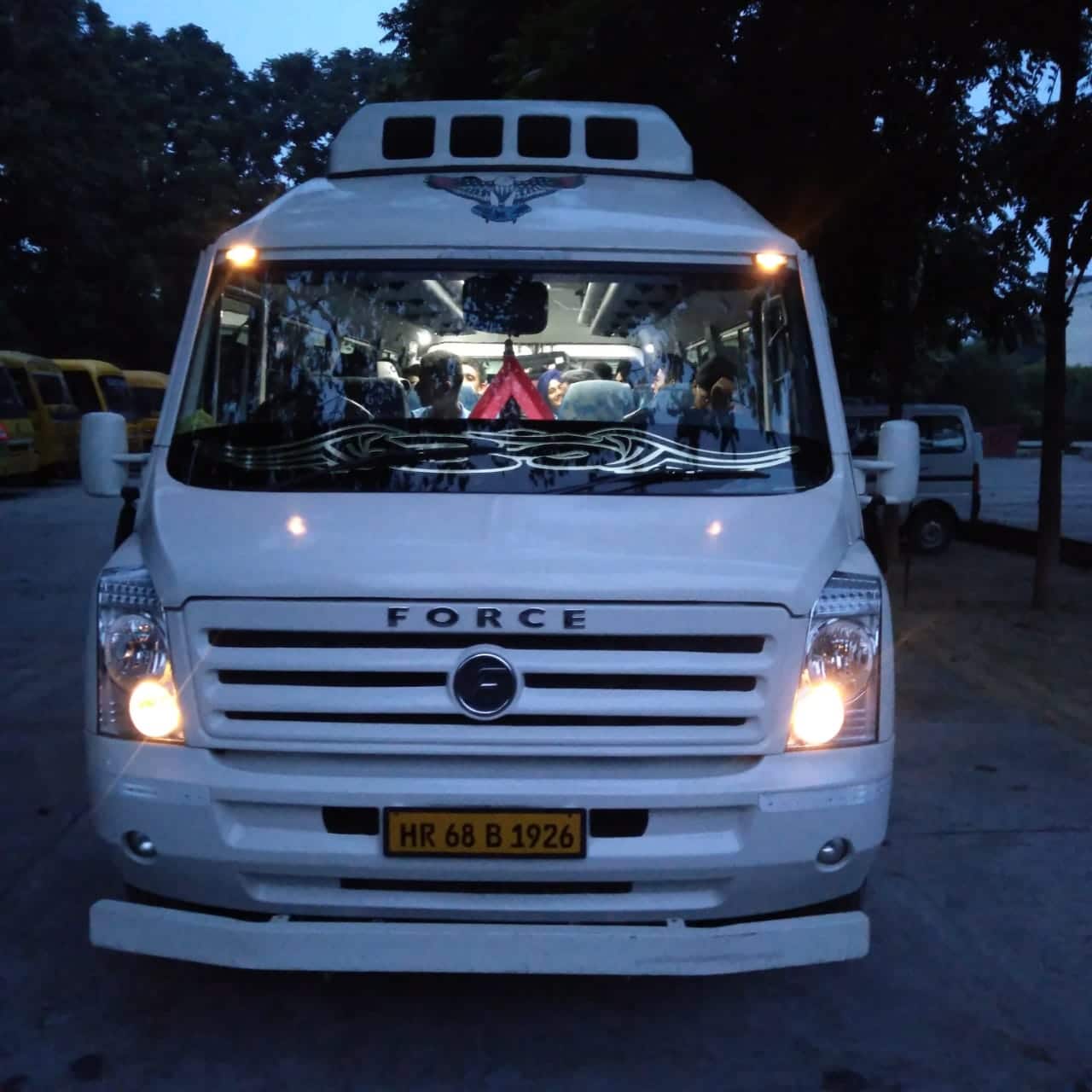
Modern Force Tempo Travellers and Force Urbania vans incorporate multi-stage roof air intake dampers that blend ambient mountain air with chilled cooling. Opening side hopper windows periodically during alpine valley transits flushes the cabin with fresh Himalayan air, keeping every traveler refreshed.
Comparison Table: Key Parameters & Options
| Safety & Comfort Factor | Recommended Practice | Unsafe / Risky Practice |
|---|---|---|
| Speed Limit | Strict adherence to 80 km/h speed limiter | Speeding above 90 km/h or tampering with limiter |
| Driver Experience | Minimum 7+ years certified mountain driving | Rookie driver accustomed only to plain highways |
| Seating Assignment | Motion-sensitive passengers placed in middle rows | Placing elderly/nauseous travelers in rear bouncy row |
| Luggage Storage | Stowed in rear boot or secure rooftop carrier | Piling heavy bags in cabin aisles and emergency exits |
| Mountain AC Usage | Turned off on steep climbs; fresh air vents open | Forcing AC on steep climbs risking engine overheating |
| Rest Stop Intervals | Mandatory 20-min breaks every 3 hours | Non-stop 8-hour marathon drives causing driver fatigue |
Practical Checklist for Your Journey
Always review this hands-on checklist before making any advance deposit or setting off on your group trip:
- Confirm driver has at least 7 years of mountain driving credentials
- Seat motion-sensitive passengers and seniors in middle cabin rows
- Ensure all luggage is stowed in the rear boot or on the rooftop carrier
- Keep the central cabin aisle and rear emergency door 100% unobstructed
- Verify that the vehicle has a functioning 80 km/h speed governor
- Carry motion-sickness tablets, mints, and sick bags for mountain routes
- Plan mandatory 20-minute comfort breaks every 3 hours of highway driving
- Keep drinking water, warm jackets, and phone chargers easily accessible
"In my 35 years of travel experience, I tell every group leader: "The best journey is one where everyone arrives feeling as fresh as when they left." Respect the mountain roads, let your driver take regular rest stops, and do not rush. When you travel with peace of mind in a safe, well-maintained vehicle, the journey becomes just as joyful as the destination!"
Real-World Customer Scenario: Lessons from North India Roads
A family of 12 from Delhi embarked on a 5-day tour to Dalhousie and Khajjiar. Two elderly family members had severe motion sickness concerns. Bharat Travels assigned a seasoned hill driver, seated the seniors in the middle row of a 17-seater luxury tempo traveller with pushback recliners, and scheduled 20-minute rest stops at scenic mountain points. The family completed the entire 700 km journey without a single episode of nausea, praising our driver professionalism and vehicle comfort.
Detailed Route Mileage & Travel Cost Breakdown
| Safety Hardware Component | Statutory Requirement | Inspection Method at Vehicle Arrival | Critical Function |
|---|---|---|---|
| Electronic Speed Limiter | Mandatory 80 km/h cap | Check dashboard seal & calibration tag | Prevents high-speed rollover & brake fading |
| AIS-140 GPS Unit & SOS | Active tracking + Panic buttons | Verify green LED status on GPS module | Real-time fleet tracking & emergency SOS alerts |
| Dry Chemical Fire Extinguisher | Pressurized 2kg ABC extinguisher | Inspect dial needle positioned in green zone | Rapid suppression of electrical or engine fires |
| Emergency Rear Exit Door | Dual-sided mechanical release latch | Test open latch from interior and exterior | Unobstructed passenger egress in accidents |
| First Aid Emergency Kit | ISI-marked medical pouch | Inspect antiseptic liquid, bandages & splints | Immediate care for minor road cuts & nausea |
Secondary Departure Day & Vehicle Verification Checklist
- Check tyre tread condition and verify spare tyre pressure before heading into hills
- Inspect dual windshield wipers and washer fluid levels for sudden mountain showers
- Ensure headlights, fog lamps, and hazard flashers function with full brilliance
- Confirm that individual seat recliner latches lock securely in upright positions
- Verify all passenger windows have functional safety locks and sun curtains
- Review emergency breakdown contact numbers with your trip coordinator
Frequently Asked Questions
Direct answers in conversational spoken style to common customer queries:
The middle cabin rows (between the front and rear axles) offer the smoothest ride with the least road vibration and sway, making them ideal for seniors and motion-sensitive passengers.
Turning off the AC compressor on steep mountain inclines frees up full engine horsepower, preventing engine overheating and ensuring safe climbing performance.
No, placing luggage in the central aisle violates motor vehicle safety rules, creates tripping hazards, and blocks emergency exit doors. All luggage must be in the rear boot or rooftop carrier.
Commercial tempo travellers are legally fitted with speed governors capped at 80 km/h on national expressways and 40 to 50 km/h on winding mountain roads.
We recommend scheduling a 15 to 20-minute rest stop every 3 hours (or approximately every 120-150 km) to allow passengers to stretch and keep the chauffeur alert.
Keep essential medicines, water bottles, warm shawls, snacks, baby food, and electronics in the cabin overhead racks. Pack heavy suitcases in the rear boot or rooftop rack.
Yes, 100% of vehicles in the Bharat Travels fleet feature AIS-140 certified GPS trackers and calibrated 80 km/h speed governors in compliance with central transport regulations.
Yes, our team of professional chauffeurs is multilingual and experienced in hosting domestic and international guests across North India.
Summary and Next Steps
Planning a group trip with a tempo traveller should be exciting, stress-free, and comfortable. By verifying commercial taxi licenses, selecting the right seating configuration, checking luggage capacity, and securing written terms for tolls and driver allowances, you set your group up for a truly memorable holiday.
At Bharat Travels Chandigarh, we have been serving family vacationers, corporate teams, and pilgrims across North India since 1989. Whether you need a 12 seater tempo traveller in Chandigarh for Shimla, a 17 seater luxury coach for Manali, or a Force Urbania for an executive tour, our team is at your service 24/7. Discover more helpful travel insights in our blog library or contact our team for immediate bookings.
Call +91-9814-111-122 Chat on WhatsApp